
Barrington residents react to proposed housing: ‘Our concerns are profound...'
Public comments fill April 28 planning board review of Belton Court Village plan
After three months of waiting, Barrington residents finally had their chance to talk about the proposed Belton Court Village housing development.
On Tuesday night, April 28, the Barrington …
This item is available in full to subscribers.
Please log in to continue |
Register to post eventsIf you'd like to post an event to our calendar, you can create a free account by clicking here. Note that free accounts do not have access to our subscriber-only content. |
Day pass subscribers
Are you a day pass subscriber who needs to log in? Click here to continue.
Barrington residents react to proposed housing: ‘Our concerns are profound...'
Public comments fill April 28 planning board review of Belton Court Village plan
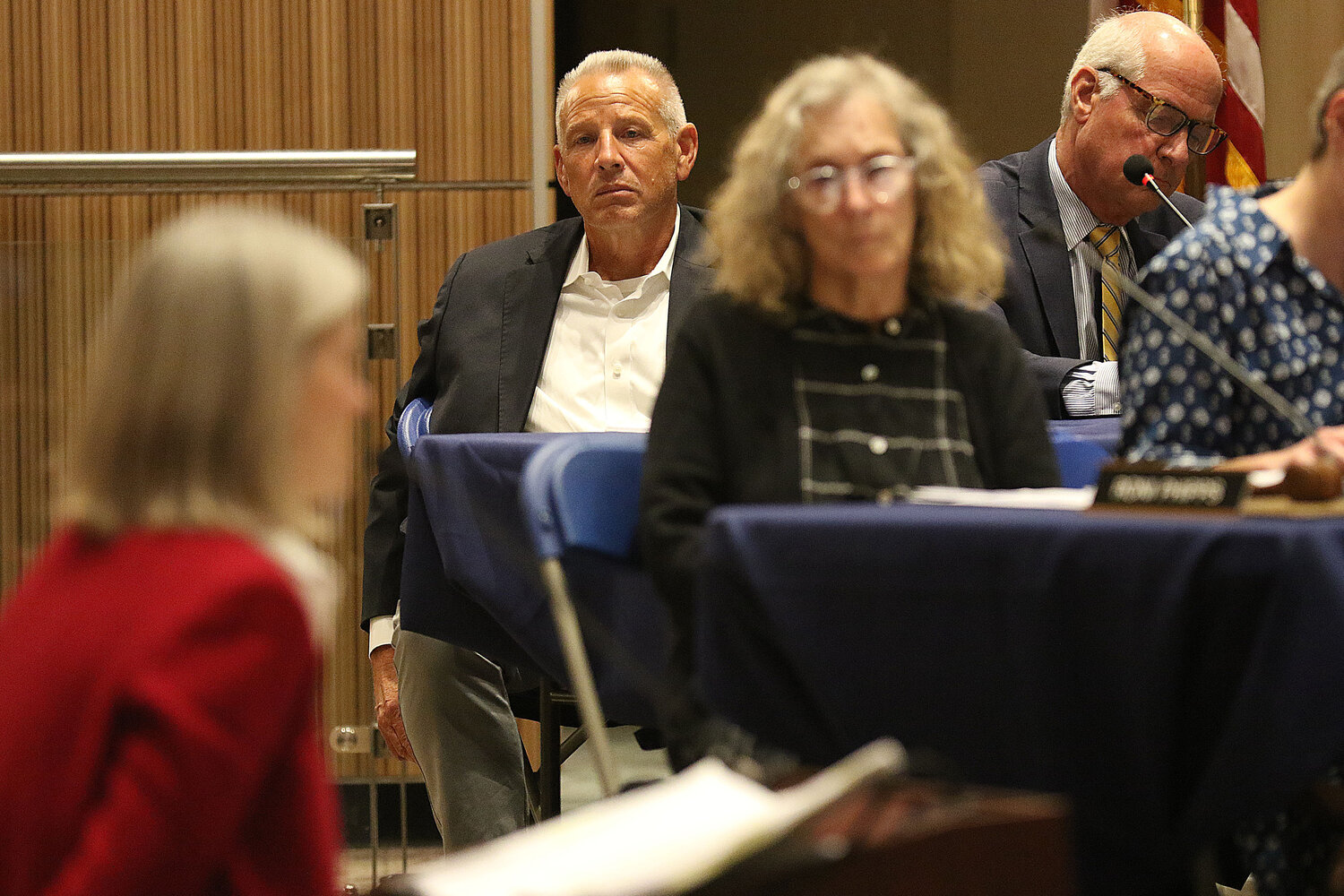
After three months of waiting, Barrington residents finally had their chance to talk about the proposed Belton Court Village housing development.
On Tuesday night, April 28, the Barrington Planning Board opened up the public comment portion of the development review. More than 200 people filled the Barrington Middle School auditorium, and when the microphone was turned their way, many residents were ready to talk.
Some residents shared concerns about the environmental impacts the 344-unit project would have on their neighborhoods. Some spoke about increased traffic, or had questions about whether the water supply can keep up with the demands of the development, or the fiscal impact the project would have on the local school department and taxpayers. A residents’ group shared a presentation, complete with testimony from expert witnesses in soil hydrology, restoration of historic buildings, fire code regulations, traffic impacts, and affordable housing.
Hugh Morgan lives close to the former Zion Bible College property where the project is being proposed. He said the development team for the land owner — Shineharmony Holdings LLC — is wrong about stormwater runoff. Morgan told members of the Barrington Planning Board that he has lived on Beaver Road for 40 years and when it rains hard, the runoff water flows from south to north. The watershed map provided by the development team as part of the application had water flowing west off the property, Morgan said.
“I don’t know where this flow came from,” Morgan said. “I disagree with it.”
Morgan and many other residents offered planning board members all sorts of reasons why they should deny Shineharmony’s comprehensive permit application. Many of the comments focused on the tangible, while some pointed to other reasons.
“For the record, the people of Barrington do not trust Shineharmony,” said Steven Courville, during Tuesday night’s meeting. “We do not trust their record of neglect at Belton Court. We do not trust their hastily prepared and incomplete application. We do not trust their empty promises. They have not been good stewards.
“We do not trust politicians and town officials who side with developers over the clear and vocal will of the people of Barrington.”
Courville said Barrington residents have attended the meetings, submitted letters and emails, and organized. He said the will of the people has been consistent and unmistakable.
“The people of Barrington have spoken with respect, with diligence and legitimate concerns for the Town of Barrington. Our concerns are profound, and are many,” he said.
Fuel tanks
Morgan, who spoke close to the end of the three-hour meeting, also discussed the set-backs proposed with the development. He called those distances “criminal.”
In addition, Morgan referenced underground fuel tanks on the former college campus. He said those tanks were the reason that the town pulled out of a prior agreement to purchase the property back in 2011. Morgan asked what the status was with the underground fuel tanks now. Have they been removed, he asked. If they are still buried on the property, what is the status of the soil, Morgan asked.
Dr. Art Salomon discussed stormwater runoff and underground water storage and concerns about groundwater mounding. Salomon also requested the tree removal plan from the developer, citing its impacts on groundwater. The planning board should not rely on wishful thinking, Salomon said, adding that he wants to ensure that the mistakes of the past are not repeated.
The safety of our neighbors is now in your hands, Salomon said.
Francisco Lovera, the chairman of the Barrington Bicycle and Pedestrian Advisory Committee, spoke about the developer’s traffic study. He said it fell short in a few areas. Lovera said Barrington’s Safe Streets plan has identified intersections of concern. He also said that many children ride their bikes to school each day and the impacts of the development on that consideration are not clearly reflected in the traffic study.
A steady stream of residents approached the microphone at the front of the auditorium and listed their concerns, questions and comments. Some spoke about the potential loss of Belton Court mansion and challenged the developer’s plan to demolish the historic building. Others detailed concerns about the sewage system, available water supply, electricity demands, state and federal statutes, fiscal impact on taxpayers, worries about the fire codes, and allegations that Shineharmony Holdings officials have not been completely forthright.
One resident said she was worried about the development’s impact on the water table in that part of town. She said her sump pump already runs more than it used to — she asked what will happen with ground water after the project is built.
400 to 500 students
Maura McCrann said that the proposed 344-unit housing development could generate 400 to 500 additional students for Barrington schools — not the 35 new students included in the developer’s plans.
McCrann said the increased student enrollment could cost Barrington taxpayers millions more. McCrann also said the local school department’s current $250 million school construction plan does not accommodate for a large influx of new students; the state does not allow a community to use projected developments when creating a school construction plan, she added.
Maple Avenue resident Maria Bruce offered a passionate plea to planning board members and the community to preserve the town, state and national heritage that is Belton Court. She said the community must stand up and keep the heritage alive for future generations. Bruce spoke about the role the Peck family played in the town’s history. She added that the current developer’s legacy was “not so grand.” Bruce said the question now is whether the community turns its back on an important piece of Barrington’s heritage.
Middle Highway resident Albert Garcia said he was an architect and challenged the developer’s message that the proposed Belton Court Village project would be a walkable community — he said the proposal scores very low on any walkability index. He also said the town would be at great risk if it was to move forward “without all the facts.” Garcia said the plans offered are too general and more detail is needed. He also said that Shineharmony’s plan to demolish Belton Court and replace it with something of the same scale raises questions.
Now is the time to demand thoughtful design, Garcia told the planning board.
Bryan Cooper shared a colorful message with the design team and members of the planning board. Cooper detailed how much money a couple would need to make to live in the proposed development (more than $130,000), and how they would need two incomes and therefore two vehicles to get to those jobs, which, he said, raises questions about the proposed parking allotted in the plan. (Cooper also said the spaces are too small.) He then said the development lacked the necessary open space and questioned where the Belton Court residents’ children would play. Cooper said that once children get to be 16 then they will likely want their own cars, questioning where a Belton Court Village resident could park that additional car.
Cooper then said that according to the Shineharmony plans, people living in the development will only need one car to drive to two jobs and will not have any kids. Cooper ended with: “Maybe this is not the place for this development.”
Legal arguments
Mark Hartmann told planning board members he grew up near the Belton Court property and now lives in Roberta Plat. He said he is a land use attorney and then offered legal arguments against the proposed development. He spoke about health and safety concerns, citing case law, and said using testimony from lay people (non-experts) was appropriate if it is based in facts.
Hartmann, whose parents still live near the site of the proposed project, said the board could also assess the impact to the school department when ruling on the plan. He said cultural features that contribute to the attractiveness of a community, such as a town’s well-regarded public schools, could be considered. He also challenged the integration of affordable housing with the proposed development — he said that specific detail needs to be decided now, during the planning board comprehensive permit review.
Maple Avenue resident Jean Josephson spoke about the buried utility lines proposed with the project. She said that in areas with a high water table, there have been issues with the underground lines. Josephson also said that climate changes for the next 30 years were not factored into the developer’s proposal.


