
Barrington mansion a victim of ‘demolition by neglect,’ says official
Planning board members comment on loss of ‘totally unique resource’
What would happen to Belton Court manor if Shineharmony Holdings LLC develops a 344-unit housing project on the former Zion Bible College property?
The historic estate, which is listed on the …
This item is available in full to subscribers.
Please log in to continue |
Register to post eventsIf you'd like to post an event to our calendar, you can create a free account by clicking here. Note that free accounts do not have access to our subscriber-only content. |
Day pass subscribers
Are you a day pass subscriber who needs to log in? Click here to continue.
Barrington mansion a victim of ‘demolition by neglect,’ says official
Planning board members comment on loss of ‘totally unique resource’


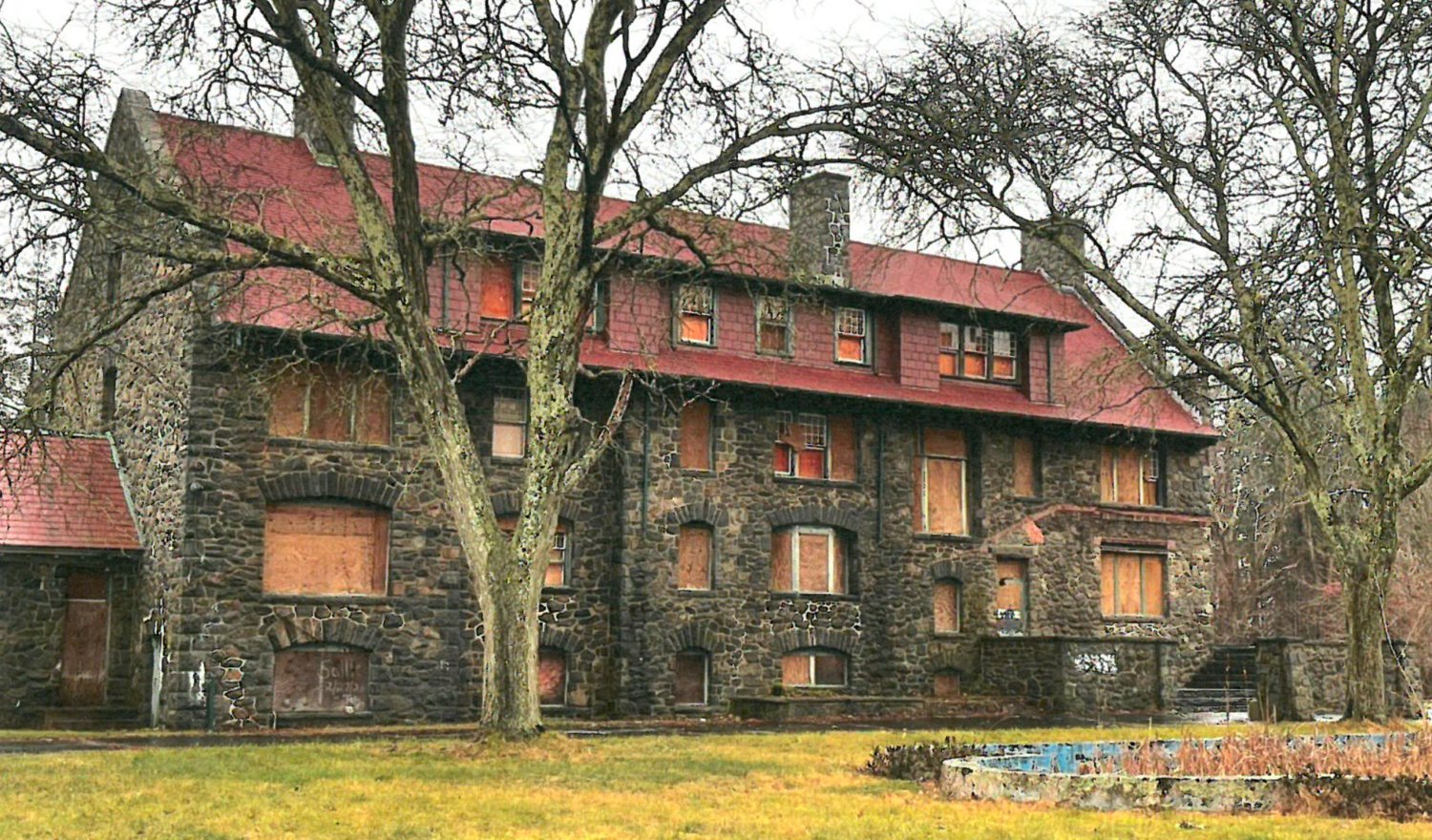


What would happen to Belton Court manor if Shineharmony Holdings LLC develops a 344-unit housing project on the former Zion Bible College property?
The historic estate, which is listed on the National Register of Historic Places, will be almost entirely destroyed. According to the development team for the Belton Court Village project, only the tower and the stables will be preserved as part of the project.
During the April 7 review of the project application, Barrington Planning Board member Heather Kilmartin asked how many square feet of Belton Court manor would be preserved — she said different sections of the Shineharmony plan listed different square footage amounts. One part showed 55,000 square feet preserved, while another listed 72,000 square feet. No clarification was offered by the development team.
Will the interior features of Belton Court manor — detailed woodworking and more — be salvaged and preserved, a planning board member asked.
Charlie Kalocsay, the president of Shineharmony Holdings LLC, said the goal was to salvage as much of the interior as possible. Kalocsay said Shineharmony has partnered with a local person with has been through the manor numerous times identifying items (Kalocsay described them as small trinkets) that can be salvaged and redistributed to historical and preservation groups.
Kilmartin suggested Shineharmony reach out to the Barrington Preservation Society. However, the idea of dismantling the once-proud estate seemed to fall short for Kilmartin. She said Belton Court was a totally unique resource. She asked if the development team had explored other funding resources or partnerships that could be used to preserve or repurpose Belton Court manor.
Kalocsay said they reviewed alternative uses of the building — he mentioned hotel groups — but everyone said there was no way to make it economically viable, he said. He spoke about using historic tax credits and reimbursements, but added that they have not been able to identify a solution that works economically.
Kilmartin said that in some ways, the most troubling part of the Belton Court Village proposal was the demolition of the historic building, and the loss of unique local history. She referenced the need for an additional evaluation of the building — Kilmartin also said that there are concerns that the price of renovation or preservation increased because Shineharmony officials failed to take care of the building. She called it “demolition by neglect.”
Roni Phipps, chair of the planning board, said the town received a letter from someone who offered to reassess the building. Kilmartin suggested that the development team also consider creating an informational marker about Belton Court on the property as part of the project. She also asked what steps would be taken during demolition to ensure safe conditions for surrounding neighborhoods. Kalocsay referenced earlier asbestos removal work on the former college campus.
Kilmartin was not alone in her concerns about the impending demolition of Belton Court manor. Planning board member Elizabeth Hermann said there were many other ways to preserve the historic landmark, beyond just filling the building envelope. She said one of the top architectural reuse programs was available a short drive away in Providence.
Not comparable
During the recent planning board hearing, Kilmartin said the examples of comparable housing developments offered by the design team were anything but. She said the other projects had less on-street parking, more retail shopping and other amenities that residents could walk to, and more land dedicated to recreation or open space. (A total of 300 square feet of open space is required on the property for every unit developed, officials said.)
A representative from the design firm DPZ said plans for Belton Court Village could have included more amenities but officials would have had to increase the project’s density.
Kilmartin countered: The other way to better balance the amenities would be to decrease the number of housing units in the project.
The DPW representative said that the development team could have increased the housing to more than 500 units, if they wanted to.


