
Young designers reimagine public spaces
Inspired by universal design principles, Gordon School fifth-graders created accessibility-focused public space redesigns with ideas advocates say could work in real communities
At first glance, the fifth-graders’ models spread across tables outside of The Gordon School looked like colorful miniature parks, beaches, playgrounds, and gathering spaces.
But beneath the …
This item is available in full to subscribers.
Please log in to continue |
Register to post eventsIf you'd like to post an event to our calendar, you can create a free account by clicking here. Note that free accounts do not have access to our subscriber-only content. |
Day pass subscribers
Are you a day pass subscriber who needs to log in? Click here to continue.
Young designers reimagine public spaces
Inspired by universal design principles, Gordon School fifth-graders created accessibility-focused public space redesigns with ideas advocates say could work in real communities


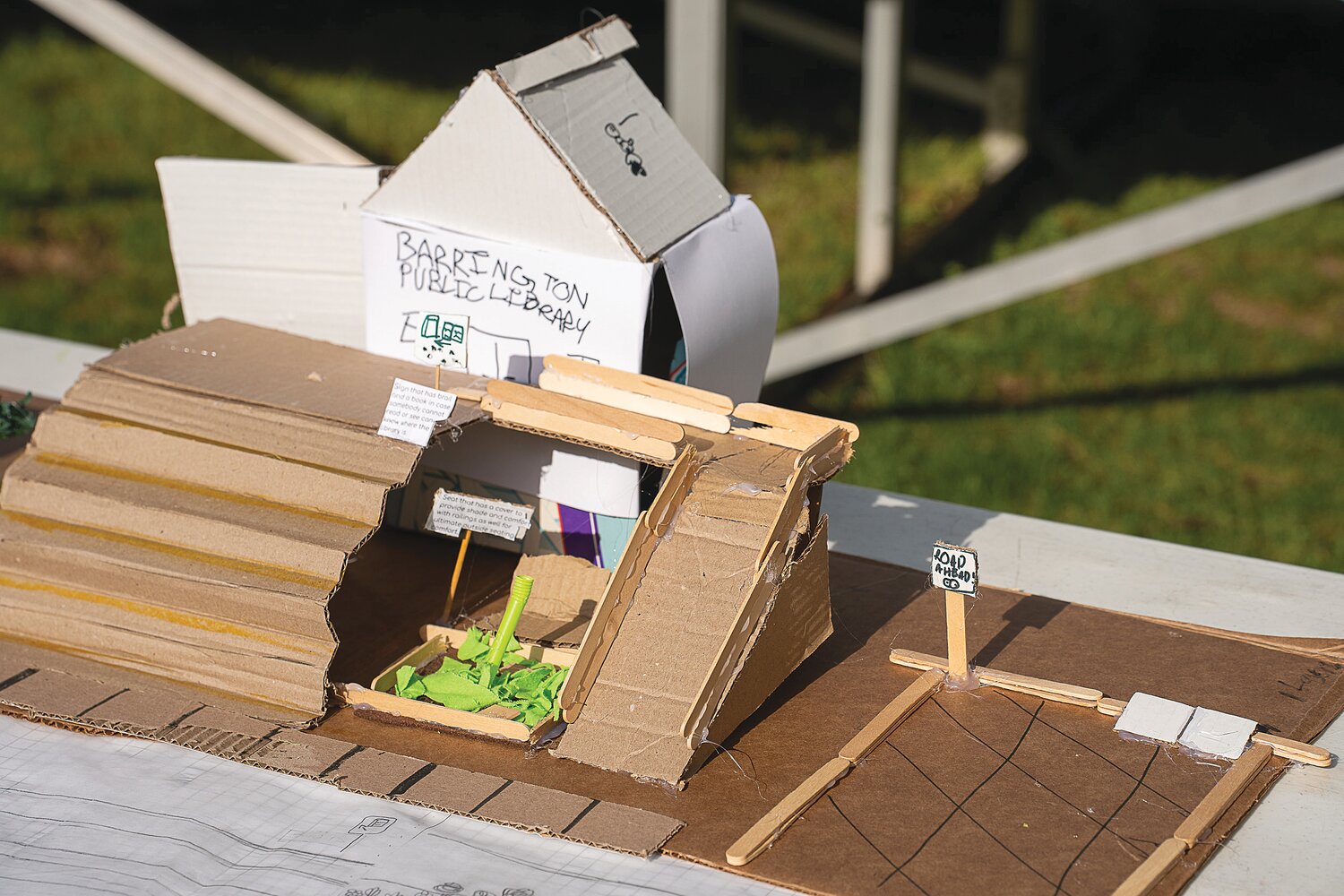


At first glance, the fifth-graders’ models spread across tables outside of The Gordon School looked like colorful miniature parks, beaches, playgrounds, and gathering spaces.
But beneath the carefully crafted ramps, textured pathways, accessible crosswalks, adaptive recreation equipment, and redesigned public areas was something much larger: a lesson in how accessibility shapes everyday life — and how even young students can help communities imagine realistic solutions for the future.
For weeks, students immersed themselves in the principles of universal design, exploring how public spaces can better serve people of all abilities. Guided by humanities teacher Mimi Roterman, the interdisciplinary project blended design, math, social awareness, and civic thinking into a hands-on exercise rooted in real-world accessibility challenges.
“We started by talking about how accessible design is good design,” Roterman explained. “This whole project was built around the idea that accessibility benefits everyone.”
To prepare, students visited 195 District Park and India Point Park alongside a parent volunteer and landscape architecture professor from the Rhode Island School of Design. There, they studied how accessibility features were integrated into public infrastructure, often in ways many people overlook.
“There were details even I hadn’t noticed before,” Roterman said. “Things like chess tables designed so someone using a wheelchair could roll underneath them comfortably.”
Students photographed and sketched the parks before selecting public spaces meaningful to them personally. Using their footsteps to measure dimensions, they later converted those measurements into scaled drawings while applying classroom lessons on ratios and proportion.
“They had to explain every design choice,” Roterman said. “Who does this help? How does it improve accessibility? How does it benefit everyone?”
The students then layered tracing paper over their original drawings to redesign the spaces before eventually creating detailed 3D models.
“We talked about how the models needed to show information,” Roterman said. “If a student changed a playground surface from woodchips to rubber for accessibility reasons, the model needed to communicate that.”
Real designs for real spaces
The resulting projects reflected an impressive range of ideas — many grounded in practical improvements that could realistically be implemented in existing public spaces.
For student designer Pippa Aracena Garfield, accessibility meant removing barriers that make parks and sidewalks difficult to navigate.
Focusing on a redesign of Lippitt Park near Three Sisters Ice Cream, Pippa noticed there was only one accessible crossing point along one side of the park.
“So I added more crosswalks with the poles you press to cross the street that light up, make sounds, and vibrate,” she explained during her presentation.
Her redesign also included an additional ramp leading to the fountain area, wheelchair-accessible chess tables, and native plant gardens intended to improve biodiversity while creating a more welcoming environment.
“I liked seeing how the small changes stacked together,” Pippa said. “It made it look good, but also made it easier to access for everyone.”
Another student, Ayla Salganik, focused her redesign on universal signage and adaptive recreation. Her project included visual symbols and clearly labeled signs intended to help visitors of all abilities identify bathrooms, entrances, and gathering spaces more easily.
“I made signs with pictures so everybody can know where things are,” Ayla explained. “Like, universally, everybody can recognize them.”
Her father, Sam Salganik — executive director of Rhode Island Parent Information Network — said projects like these reflect how conversations around accessibility and inclusion continue evolving across communities.
“Thirty-six years ago was the passage of the ADA and IDEA,” Salganik said. “Before that, many people with disabilities were institutionalized. Spaces weren’t designed for them because society often didn’t see them.”
Today, he believes accessibility conversations are continuing to evolve beyond minimum compliance standards into broader ideas of belonging and inclusion.
“We’re starting to see the intersection of aging and disability in ways society hasn’t fully prepared for yet,” he said. “What does aging look like for someone with intellectual disabilities? These are conversations communities are going to have to continue thinking about.”
A real-life perspective
That same sense of progress resonated with Autumn Rain Johnson, who attended the showcase after previously speaking with students about accessibility advocacy and universal design.
“I just like seeing the creativity they have, things I probably wouldn’t even think of,” Johnson said. “Children have a very unique perspective.”
One student concept that especially stood out to her involved vibrating beach safety bracelets that could communicate with lifeguards through a digital monitoring system.
As someone who regularly navigates accessibility barriers herself, Johnson said many of the students’ ideas addressed real challenges that still exist in communities across Rhode Island.
“There’s always stairs going somewhere,” she said. “Even if it’s just one stair, that can completely stop somebody from accessing a space.”
During her year as Miss Wheelchair Rhode Island, Johnson worked alongside officials in North Kingstown to improve beach accessibility through shoreline mats and beach wheelchair access — efforts she said prove meaningful changes are entirely possible when communities prioritize them.
“These projects need to be seen,” Johnson said. “A lot of these are real changes that could actually happen and would benefit everyone.”
That idea — that accessibility improvements are not hypothetical, but achievable — remained central throughout the showcase. Many of the students’ proposals reflected solutions already being implemented successfully in communities elsewhere: adaptive recreation equipment, sensory-friendly design, additional ramps, safer crosswalk systems, clearer signage, and more inclusive gathering spaces.
The next step, organizers and advocates said, is making sure these conversations continue beyond the classroom.
Ideas can become reality
Roterman hopes projects like this encourage students to see themselves as active participants in shaping their communities.
“We wanted students thinking about spaces that actually exist in their communities,” she said. “Not imaginary places. Real places they care about.”
Johnson believes local leaders, planners, accessibility commissions, and community organizations could use projects like these as inspiration for future improvements in parks and public spaces across Rhode Island.
“These are changes communities can start making now,” she said. “A lot of them aren’t huge overhauls. Sometimes it’s another ramp. Better signage. More accessible crossings. Those things matter.”
Several advocates at the showcase said projects like these could easily become part of future conversations with municipal planning boards, parks departments, accessibility commissions, and community organizations as Rhode Island communities continue updating public spaces.
Salganik said continuing progress will depend on communities involving people with disabilities directly in planning conversations from the beginning rather than treating accessibility as an afterthought.
“The more people grow up seeing accessibility as normal community design, the more naturally these ideas become part of planning,” he said.
And perhaps that was the most powerful part of the showcase itself — the students were not simply imagining idealized futures, they were identifying solvable problems in spaces they already know and use, and presenting thoughtful, achievable ideas for how those spaces could better serve everyone.
“When you open things up for disabled people, you open them up for everybody,” Johnson said. “That’s what universal design is.”


