
Alarm bells ring on imminent East Providence budget pinch
Rising costs to fund the city’s pension fund, combined with increasing debt service on bond-funded projects and a significant spike in healthcare will present tough negotiations ahead for city officials.
This item is available in full to subscribers.
Please log in to continue |
Register to post eventsIf you'd like to post an event to our calendar, you can create a free account by clicking here. Note that free accounts do not have access to our subscriber-only content. |
Day pass subscribers
Are you a day pass subscriber who needs to log in? Click here to continue.
Alarm bells ring on imminent East Providence budget pinch


Rising costs to fund the city’s obligations to its public safety retirees, combined with increasing debt service on bond-funded projects and a significant spike in healthcare expenses in the coming year will present tough negotiations ahead for city officials.
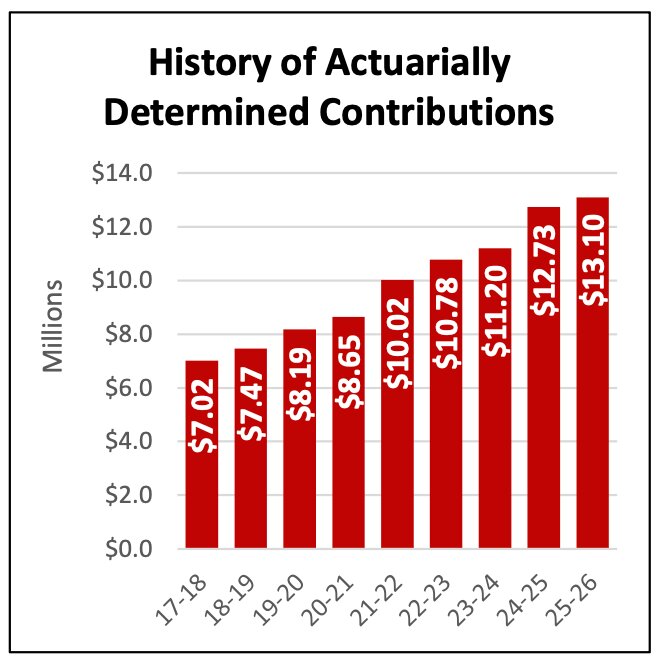
According to the most recent report from Nyhart, the city’s actuary, dated Oct. 31, 2024, East Providence has been steadily increasing their contributions to the pension fund since 2017/18, when they allocated $7.02 million towards its liabilities. But those increases have not tapered off or steadied in the time since. Rather, they have continued to increase sharply.
In Fiscal Year 2024 (which ranged from Nov. 1, 2023 to Oct. 31, 2024), for example, the city allocated $11.2 million to the fund. In the current fiscal year, which ends Oct. 31, 2025, the city allocated $12.73 million.
During the April meeting of the Fire and Police Retirement System Board of Trustee with Mayor Bob DaSilva and representatives from the fire and police unions, consultants for Nyhart recommended that the city raise that contribution amount by around $500,000 for the upcoming fiscal year, for a total of $13.1 million — which would represent an overall 86.6% increase from the $7.02 million contributed in FY18.
Upon hearing that request for another increase, Mayor DaSilva raised a red flag.
“The plan needs to be looked at as a whole. It can’t always be brought to the taxpayers to make up the difference,” he is quoted as saying in the minutes of the meeting, adding that he didn’t want to potentially have to rely on exceeding the 4% tax levy cap (like recently occurred Providence and Little Compton). “It’s not sustainable.”
A ‘critical’ situation
The city’s fire and police pensions are combined into one fund, but each has its own assets and liabilities within that combined fund.
While the police side of the fund sits at around 76% funded (with around $144 million in total liability versus around $109 million in assets), that fund greatly benefited from a windfall of around $50 million that came out of a national settlement with Google back in 2013. However that money, DaSilva confirmed, was required to be utilized only on the police side of the pension.
On the fire side, things are bleaker. The city has around $156 million in total liability with only around $53 million in assets, rendering that portion of the fund at about 34% funded, and dragging the pension fund as a whole down to 54% funded; with just under $300 million in total liabilities and around $162 million in total assets (for a total unfunded liability of $137,590,481).
According to a letter dated June 13, 2025 from Nyhart consultant Jen Turk to Glenda Delgado, the city’s finance director, the situation is a serious one. Any pension fund that is below 60% funded is to be defined by Rhode Island law as in “critical status”.
DaSilva, in a recent interview about the situation, said that this status contributed to the city being downgraded in its bond rating from AA to AA-, which he said will have a negative effect on interest rates when they go out for bonding on anticipated or ongoing school projects approved in recent elections, such as renovations to Martin Middle School.
The result is a compounding effect. Debt service for bond-funded projects is increasing by as much as $3.9 million next year, DaSilva said. An anticipated 7.64% increase to health insurance costs for all municipal employees, and 6.36% for dental, will potentially result in an increase of $250,000 or more just to cover police and fire department personnel (according to FY25 budget data).
Add to that a $1.5 million structural deficit from the current budget year that the city found itself in when a delta in anticipated state aid required the city to shift some of its capital money to the school department, and the problems add up to something more than a run-of-the-mill budgetary crunch.
“All these things are impacting our bottom line,” DaSilva said. “And so this is why it's important to let people know that we're trying to keep costs under control for the city on the budget.”
A quick look at fire and police benefits
Current pension benefits granted to East Providence public safety employees have been mostly consistent for over a decade.
Firefighters hired after Nov. 1, 2014 can retire after 25 years of service, and can receive a pension starting at age 55 based upon the average of their final three years of pay. They get 2.25%, non-compounded cost of living adjustments (COLAs) for the rest of their lives, and can reach a maximum annuity of 70% based on the number of years served. As of Nov. 1, 2024, firefighters contribute 11.25% of their salary towards the pension fund.
Police officers hired after Nov. 1, 2014 can retire after 25 years of service and begin collecting their pensions at age 50 based on the final three years of service, with a maximum annuity of 72%. They contribute 10% of their salary towards the pension fund as of Nov. 1, 2024. Like the firefighters, they also get 2.25%, non-compounding COLAs.
Both retired firefighters and police hired after Nov. 1, 2014 can continue to receive healthcare from the city following their retirement until they are eligible for Medicare or are able to find a replicable replacement policy through other employment. If they take the municipal insurance option, they must pay a 20% co-share.
What to do, then?
Current contracts with the city’s police and fire unions expire on Oct. 31, 2025, and given the financial strain outlined above, DaSilva said that negotiations will be especially important for this next contractual term.
“Everything is on the table as we enter negotiations,” he said.
In the meeting minutes for the April pension board meeting, DaSilva said that “drastic” changes could be necessary, mentioning possibly delaying COLAs until retirees hit social security age or even delaying pension benefits until that time as a whole.
He also mentioned that “layoffs, furloughs, or pay cuts” could all be possible. Changes to shift structure, overtime, and other foundational pieces of the system could also be looked at.
“A lot of it has to do with when you start collecting your pension,” he said in his interview with The Post. “What is the percentage you collect it at? … There needs to be some look at the entire structure of the pension to try and figure out how we prolong it without having to go to local taxpayers to increase our contributions by millions of dollars every year.”
DaSilva didn’t limit the potential sacrifices to the unions either, saying that the city would have to potentially hold off on hiring employees in general, and that he had approached school committee leadership to inform them that if they can find ways to save money, “this is the year it has to happen.”
“I don’t want to make it sound like the city is on the verge of bankruptcy, but it’s not a bad message to send out to the employees and to the public to know that as we enter negotiations, this is the reality,” DaSilva said. “We’re not making this up.”


