
New book on dragonflies and damselflies is the result of nearly 3 decades of research
Dragonflies and Damselflies are among the most beautiful of insects, and Rhode Island provides a uniquely fertile research ground for the study of Odonata (which is both the scientific name and, …
This item is available in full to subscribers.
Please log in to continue |
Register to post eventsIf you'd like to post an event to our calendar, you can create a free account by clicking here. Note that free accounts do not have access to our subscriber-only content. |
Day pass subscribers
Are you a day pass subscriber who needs to log in? Click here to continue.
New book on dragonflies and damselflies is the result of nearly 3 decades of research

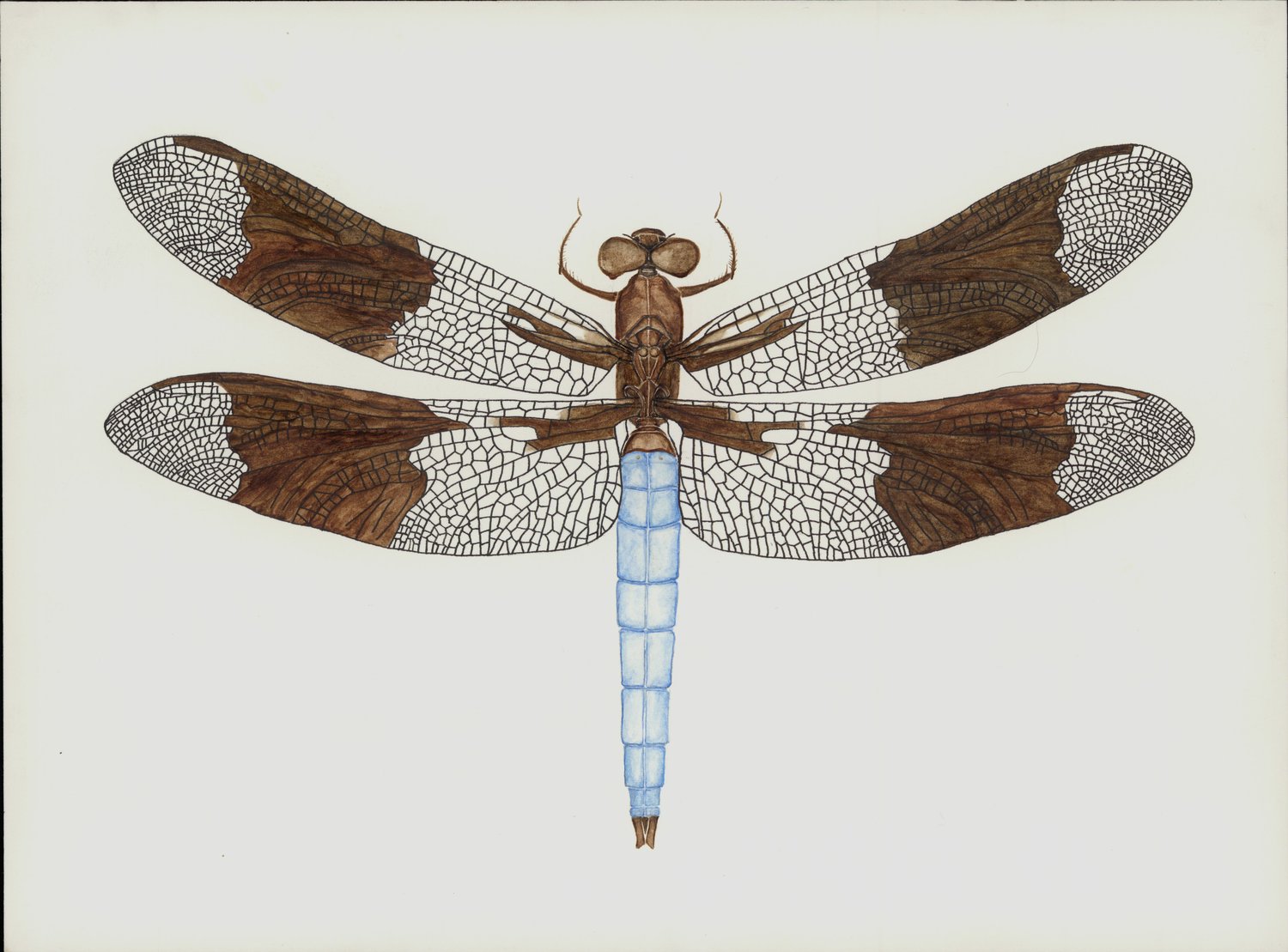


Dragonflies and Damselflies are among the most beautiful of insects, and Rhode Island provides a uniquely fertile research ground for the study of Odonata (which is both the scientific name and, according to wildlife biologist and author Virginia (Ginger) Brown, of Barrington, “a lot easier to say than Dragonflies and Damselflies, when you find yourself saying it all the time.”
Found near bodies of water (always), primarily fresh (usually) and even near brackish water in the case of 4 local species, Odonata are plentiful along the sparsely developed coastal plain. Over the past 30 years, Ms. Brown and a team of over 70 volunteers and researchers have been collecting samples and documenting the species of Odonata in Rhode Island, gathering over 15,000 samples and identifying 139 species in the state.
A new book, Dragonflies and Damselflies of Rhode Island, is the result of those countless hours of research. Written by Ms. Brown and Illustrated by Nina Briggs of Narragansett, the book is available through the Rhode Island Department of Environmental Management.
Ms. Brown has served one the staffs of the Cape Cod Museum of Natural History, The Nature Conservancy (in RI), and the Rhode Island Natural History Survey. During her years with the Cape Cod Museum of Natural History, she wrote her first book: Dragonflies and Damselflies of Cape Cod. While with the Nature Conservancy and Rhode Island Natural History Survey, Ginger led the Rhode Island Odonata Atlas, a multi-year inventory of dragonflies
and damselflies. She currently teaches environmental science and nature for Living In Fulfilling Environments, Inc. and the Audubon Society of Rhode Island. She also participates in regional and range-wide conservation projects for odonates and gets out to chase dragonflies and other insects as often as possible.
Ms. Briggs holds a Master of Science in Plant Pathology/Entomology with a concentration in scientific illustration, from the University of Rhode Island. Nina worked for the Nature Conservancy and the Rhode Island Natural History Survey on the Odonata Atlas as a field scientist and taxonomist. Prior to getting her MS, Nina was, and continues to be, a ceramic artist, showing her work at galleries and shows across the country. She is an Artist Member of the Providence Art Club and an Associate Member of the Cooperative Gallery in Westerly, Rhode Island.
Their collaboration really began years ago, when Ms. Briggs was in graduate school and began to assist with Ms. Brown’s ongoing efforts inventorying and monitoring of Dragonflies and Damselflies. It’s been a longtime labor of love for the two collaborators. “We joke that it’s our 20-year project,” said Ms. Briggs, who admitted that some aspects of illustrating some species — particularly those with the most detailed veined wings — was very labor-intensive.
While Rhode Island misses some of the boreal species that can be found further north, it does benefit from sitting at a midpoint where both more southern and northern species can sometimes be found. “While the book covers 3 decades of inventory, the years from about 1998 to 2004 was probably the greatest period of learning about this group,” said Ms. Brown.
If you think that one of the most challenging thing about studying these insects might be catching them, you’d be right. “They’re really fast,” said Ms. Brown. Some species are much more abundant in Rhode Island than others, and others are rare. “And we don’t really know why. Perhaps this is the edge of their range, or maybe we just need more research.”
“This book was a long time in the making,” said Ms. Brown. “I had a draft in 2005.” Funding was a challenge, so Ms. Brown approached The DEM, which had money allocated for publications, and they helped see the project over the finish line.
Dragonflies and Damselflies of Rhode Island is designed for experienced naturalists as well as beginners; the 384 page book contains information on natural history, behavior, habitat, and conservation. Each species account presents a colorful illustration, flight season graph, and local distribution map, as well as detailed information on identification, range and distribution, abundance, habitat details, conservation, and personal notes about encounters with these fascinating insects.
For beginners looking to go on a hunt for Dragonflies and Damselflies, Ms. Brown recommends seeking out a weedy pond between late April through June. You don’t have to go far — any pond near your home will do, or anywhere you can wade around a shoreline, with plenty of weeds on which to perch.
Books may be purchased for $25 including postage and handling. Contact DEM.DFW@dem.ri.gov to receive an order form.
Keywords
Dragonflies, damselflies, Nina Briggs, Virginia Brown


