
Talking about money without tearing each other apart
Local author’s book explores how couples can approach financial discussions with more understanding and less conflict
For many couples, the hardest conversations aren ’ t about love, commitment, or even trust — they ’ re about money.
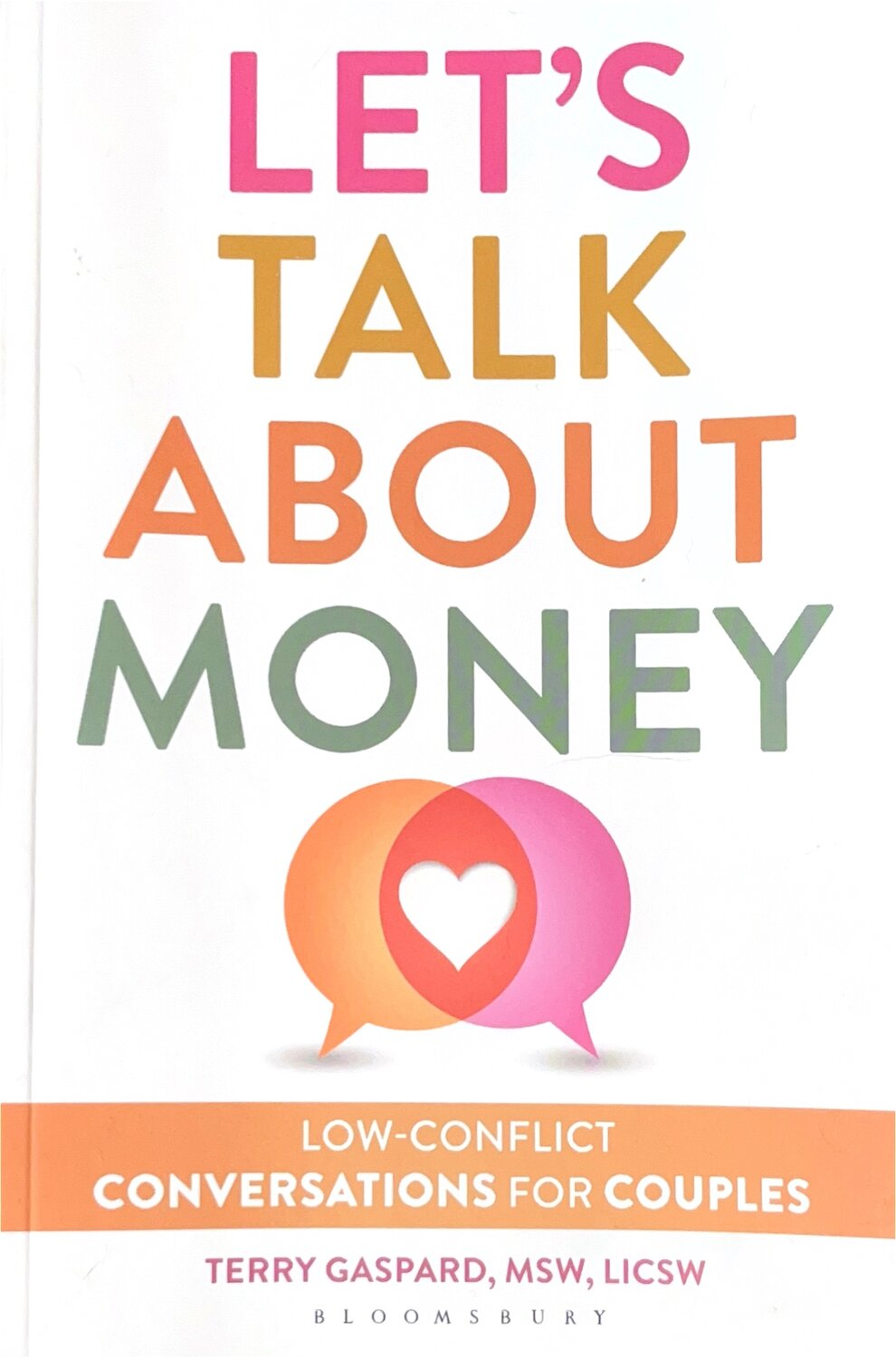
That ’ s the premise behind "Let ’ s Talk About Money: Low-Conflict …
This item is available in full to subscribers.
Please log in to continue |
Register to post eventsIf you'd like to post an event to our calendar, you can create a free account by clicking here. Note that free accounts do not have access to our subscriber-only content. |
Day pass subscribers
Are you a day pass subscriber who needs to log in? Click here to continue.
Talking about money without tearing each other apart
Local author’s book explores how couples can approach financial discussions with more understanding and less conflict



For many couples, the hardest conversations aren’t about love, commitment, or even trust — they’re about money.
That’s the premise behind "Let’s Talk About Money: Low-Conflict Conversations for Couples,” the new book by Bristol-based therapist Terry Gaspard. Drawing on decades of experience counseling couples, as well as interviews with more than 100 partners, Gaspard argues that financial conflict is rarely just about dollars and cents. Instead, it reflects something deeper: personal history, emotional patterns, and fears.
“Money conflicts are usually not just about money,” Gaspard explains. “They’re about what’s underneath — how you were raised, what you believe, and what you’re afraid of.”
Beyond the bank account
In her work with couples, Gaspard sees the same issues surface again and again: secrecy, mismatched habits, and avoidance. Some partners track every dollar with vigilance; others prefer not to look at the numbers at all. Many fall somewhere in between.
She describes these tendencies as “money styles” and “money mindsets.” One person may operate from scarcity, always worried there won’t be enough, while another assumes money will come and go freely. On their own, neither approach is inherently wrong. But together, without communication, they can create friction that slowly erodes a relationship.
“Half of couples don’t regularly talk about money transactions,” Gaspard says. “And more than half feel embarrassed to talk about money at all.”
That silence, she argues, is where problems begin.
The cost of avoidance
When couples avoid financial conversations, tension doesn’t disappear — it builds. Small misunderstandings turn into resentment. In more serious cases, secrecy can cross into what Gaspard calls financial infidelity.
This doesn’t mean a $30 impulse purchase. It means intentionally hiding significant financial information: secret accounts, undisclosed debt, or lending money without a partner’s knowledge.
“It’s about withholding information because you’re afraid of the reaction,” she says. “But that secrecy can damage trust just like other forms of betrayal.”
Repair, she notes, is possible, but it requires honesty, accountability, and time. Apologies must be paired with consistent transparency, and often, outside support can help guide the process.
Learning to talk differently
At the heart of Gaspard’s approach is not budgeting spreadsheets or financial formulas, but communication.
Influenced by the work of John Gottman, she encourages what’s known as a “soft startup” — beginning conversations with personal feelings rather than accusations.
Instead of: “You spend too much money,”
Try: “I feel anxious about our finances because I grew up in a household where money was tight.”
That shift — from blame to vulnerability — can change the entire tone of a conversation.
“It becomes less about being right,” Gaspard says, “and more about understanding each other.”
She also emphasizes timing. If a conversation turns heated, it’s better to pause and revisit it within 24 hours rather than let it linger unresolved.
Finding common ground
One of the book’s central ideas is that couples don’t need identical financial habits — they need shared goals.
That might mean compromising between saving and spending, or balancing long-term planning with present-day enjoyment. It could look like agreeing on a home budget, choosing a vacation that works for both partners, or simply setting regular “money dates” to stay aligned.
The key, Gaspard says, is shifting the mindset from me versus you to us versus the problem.
“It’s about building a shared vision,” she explains. “You don’t have to agree on everything — but you do need to feel like you’re working toward something together.”
Practical tools for real life
While the book is grounded in research, it’s designed to be practical. Each chapter includes exercises couples can do together, from identifying money habits to creating a budget that reflects both partners’ priorities.
Gaspard also explores real-world decisions many couples face:
- whether to combine finances or keep them separate;
- how to manage debt;
- when to consider a prenup or postnup;
- why estate planning is essential, even for younger couples.
Her approach is flexible rather than prescriptive. For some, a single shared account works best. For others, a hybrid “three-pot” system — joint accounts for shared expenses and individual accounts for personal spending — offers a balance between transparency and independence.
A conversation worth having
Ultimately, Gaspard’s message is simple: talking about money may be uncomfortable, but not talking about it is far riskier.
“Conflict is inevitable,” she says. “But how you handle it — that’s what determines the health of your relationship.”
For couples willing to have those conversations, with openness, patience, and a willingness to listen, money can shift from a source of stress to an opportunity for deeper connection.
And in that sense, the book’s title isn’t just advice, it’s an invitation.
Let’s talk about money.


