
Portsmouth narrowly opposes gas hookup moratorium
Letter to state regulators says ban is ‘not in the public interest,’ but critics warn decision locks in LNG facility at Old Mill Lane
In a split 4-3 decision Monday night, the Portsmouth Town Council voted to notify the R.I. Energy Facility Siting Board (EFSB) that it opposes imposing a moratorium on new natural gas hookups on …
This item is available in full to subscribers.
Please log in to continue |
Register to post eventsIf you'd like to post an event to our calendar, you can create a free account by clicking here. Note that free accounts do not have access to our subscriber-only content. |
Day pass subscribers
Are you a day pass subscriber who needs to log in? Click here to continue.
Portsmouth narrowly opposes gas hookup moratorium
Letter to state regulators says ban is ‘not in the public interest,’ but critics warn decision locks in LNG facility at Old Mill Lane
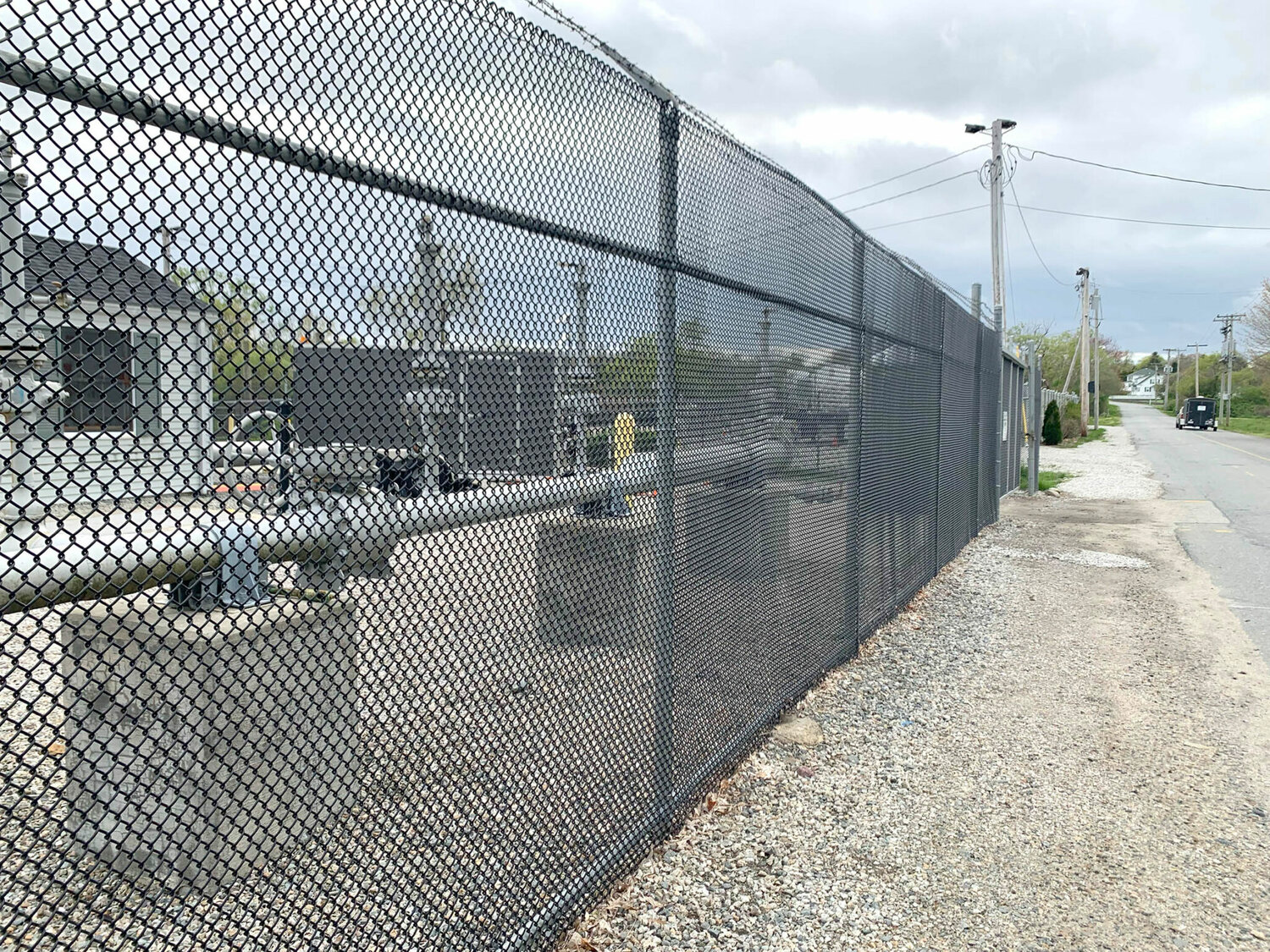
In a split 4-3 decision Monday night, the Portsmouth Town Council voted to notify the R.I. Energy Facility Siting Board (EFSB) that it opposes imposing a moratorium on new natural gas hookups on Aquidneck Island.
Council President Keith Hamilton, Vice President David Gleason, and members Sharlene Patton and David Reise supported sending the letter, while members Sondra Blank, Mary McDowell, and Juan Carlos Payero voted against it. The letter will be signed by Town Administrator Richard Rainer, Jr. and transmitted to the EFSB as part of its ongoing review of Rhode Island Energy’s (RIE) Aquidneck Island Long-Term Gas Capacity Study.
The council’s letter states bluntly: “The Town of Portsmouth opposes a moratorium on new gas hook-ups on Aquidneck Island, as it is not in the public interest.”
It also outlines several related positions: requesting eventual discontinuation of the portable LNG operation at Old Mill Lane, urging RIE to prioritize community safety and fair distribution of costs, calling for stronger incentives for conservation and demand reduction, and asking that the feasibility of a new pipeline to the island be investigated.
Old Mill Lane at center
Much of the debate centered on RIE’s liquefied natural gas (LNG) facility at Old Mill Lane, which was introduced on a temporary basis in the 2019-20 winter following a regional supply crisis. The council’s letter describes the site as “not an appropriate long-term location” and calls for its removal “if and when feasible.”
Hamilton underscored the dependence on Old Mill Lane absent new supply sources. “Moratorium or not, unless there’s a solution to bring more gas onto this island, Old Mill Lane stays there, period,” he said. “It does not go away unless there’s a great supply of gas on this island.”
Gleason stressed that some residents may not fully understand what part of the facility could be phased out. “The take station is the first point of contact bringing gas onto the island. What we are trying to eliminate is the seasonal bringing of six LNG trucks and tying them into the station,” he said. “Residents can probably live with what was there prior to 2019.”
Hamilton agreed, calling the peak-shaving facility “temporary” because Rhode Island Energy must reapply for permits every five years.
McDowell, however, argued that voting against a moratorium sends the wrong message to regulators and the utility. Without a gas moratorium, there’s no reason for RIE to explore alternatives to natural gas and accelerate programs to reduce natural gas demand, she said.
“It gives them no incentive to do something that’s drastically needed at Old Mill Lane. That’s what I’m against this,” McDowell said.
Resident, lawmaker weigh in
Steve MacDonald, who lives across from the LNG site, urged the council to support a moratorium. He recounted years of frustration since receiving a 2020 letter notifying residents of the “temporary” station.
“My issue at the time was noise. Unfortunately the equipment is very loud,” he said. Things didn’t improve by 2021, and MacDonald said his concerns broadened to include the six large trucks that kept coming into the neighborhood to deliver LNG.
MacDonald said after reviewing regulatory filings, he concluded the company never intended the facility to be short-term. “You could see Rhode Island Energy dragging their feet on giving the (EFSB) what they needed,” he said.
Despite letters from the utility pledging to consider alternative sites, that never happened, MacDonald said,
He questioned the company’s commitment to the state’s Act on Climate, which mandates 45 percent emissions cuts by 2030 and net-zero by 2050. “Nowhere in this letter does it say they have any intentions of curtailing the use of gas in the State of Rhode Island. They certainly have no intentions of curtailing the use of gas on Aquidneck Island,” he said.
“Frankly, I don’t see how we can do it as a state unless we stop additional gas hookups,” MacDonald continued. “If the council approves this, it’s basically saying you’re OK with global warming.’”
‘Who wins?’
State Sen. Linda Ujifusa (D-Dist. 11), who represents Portsmouth, also pressed the council to support a moratorium. She framed the issue as one of fairness and cost.
“Who wins if we continue to have hookups? The utilities and private developers in Middletown and Newport,” she said. “Who loses? The people like Mr. MacDonald, who lives around Old Mill Lane, and every working family who’s already struggling to pay for their energy bills.”
“When you add more gas hookups, you do not lower costs for existing customers, you raise them,” Ujifusa continued. “Every new hookup means more pipe in the ground, more delivery charges, more guaranteed profits for the utility. If you vote to allow more gas hookups, you are not voting in the best interests of the people of this town.”
Ujifusa also challenged the council: “Where are your facts and analyses that are dictating how you vote? I think the people in this town deserve and want your transparency.”
Clash over costs, future energy
Hamilton responded that affordability was a major factor. “How much greater is it for a person with electrical heat to heat their home in the wintertime in New England, specifically Portsmouth, R.I., then it is for somebody to heat their house with gas?” he asked.
Ujifusa countered: “The vote is about will we do more hookups. It is not whether a gas customer currently pays less, it is about whether we are going to allow more hookups.”
Hamilton maintained that electric would remain more costly than gas “well into the future.”
Ujifusa said the path forward lay in renewables. “If we try to keep the status quo and try to add more hookups, that (LNG) facility is going to stay,” she said. “If you want to fix this problem, you have got to start throwing some effort into getting more renewable energy. I have yet to hear from anyone on how this helps Portsmouth.”
Future meetings
The council will next meet at 7 p.m. on Tuesday, Oct. 14; Monday, Oct. 27; and Monday, Nov. 10.


